
Fun Shakespeare trivia questions work in class games because they turn a dense literary subject into active recall, competition, and conversation, while still reinforcing real historical and textual knowledge.
When done correctly, trivia does not replace close reading or analysis, but it strengthens name recognition, plot awareness, language familiarity, and historical context, all of which make later discussions of Shakespeare’s work easier and more productive.
Why Shakespeare Trivia Works in the Classroom
Shakespeare remains a core part of English curricula in many countries, particularly in the UK, the US, Canada, Australia, and parts of Europe. Yet studies in secondary education repeatedly show that students struggle first not with interpretation, but with basic orientation: who the characters are, which play belongs to which genre, and how Shakespeare fits into his historical moment. Trivia addresses this gap directly.
Cognitive learning research shows that low-stakes quizzing improves long-term retention, a principle known as the testing effect. In classroom settings, trivia games activate this effect without the anxiety associated with graded tests.
When students answer short, factual questions about Shakespeare’s life, plays, or language, they reinforce memory pathways that later support higher-order skills such as theme analysis and comparative writing.
From a practical standpoint, trivia games also scale well. They can be used with groups of 10 or 30 students, adapted for different age levels, and completed in 10 minutes or an entire lesson. Importantly, trivia allows participation from students who may not yet feel confident interpreting Shakespearean language aloud.
Core Shakespeare Facts Every Trivia Game Should Include
Well-designed trivia questions should be anchored in widely accepted Shakespeare scholarship. While debates exist around authorship theories and exact play counts, classroom trivia should rely on consensus facts supported by historical records and literary research.
William Shakespeare was born in Stratford-upon-Avon in April 1564 and died in April 1616 at the age of 52. He lived during the Elizabethan and early Jacobean periods, a time when theatre was one of the most popular forms of public entertainment in London.
Most scholars agree that Shakespeare wrote or co-wrote approximately 37 plays, 154 sonnets, and several long narrative poems. His works are commonly divided into tragedies, comedies, histories, and late romances.
Using these foundational facts in trivia games ensures students develop a factual framework that aligns with curriculum standards and examination expectations.
Easy Shakespeare Trivia Questions for Entry-Level Games
Easy questions are essential at the start of any class game. They lower the barrier to participation and help reluctant students engage early. These questions should focus on clear, verifiable facts rather than interpretation.
Typical examples include identifying Shakespeare’s birthplace, recognizing famous characters such as Hamlet or Romeo, and matching well-known quotes to their plays. These questions work particularly well at the middle school level or at the beginning of a Shakespeare unit in high school.
For example, asking which play includes the line “To be, or not to be” tests cultural literacy without requiring prior close reading. Similarly, questions about the Globe Theatre introduce architectural and historical context that later supports discussions of audience behavior and performance conditions.
Medium-Difficulty Trivia That Builds Literary Awareness
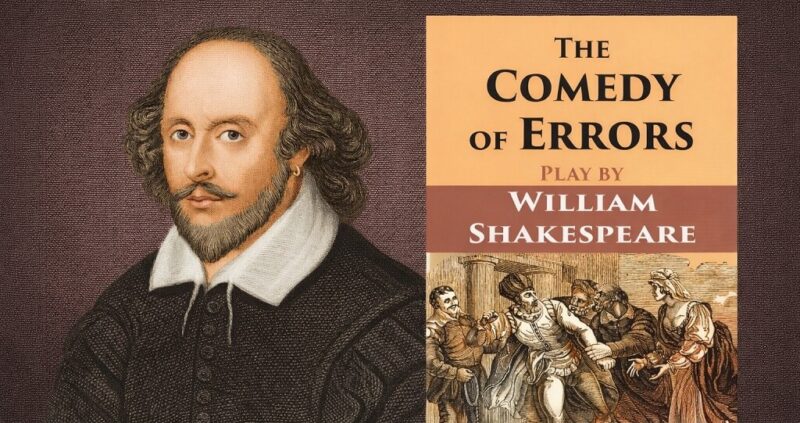
Once students demonstrate basic familiarity, trivia can move toward questions that require more specific knowledge. These questions help students connect characters, settings, and genres across different plays.
Questions about mistaken identity in The Comedy of Errors, the Scottish setting of Macbeth, or the pastoral world of As You Like It reinforce how Shakespeare reused and adapted classical and contemporary story structures.
At this level, trivia begins to support literary analysis by highlighting patterns rather than isolated facts.
Medium-difficulty questions are particularly effective for team-based games, where students can collaborate and reason together. This mirrors real academic discussion more closely than individual recall alone.
Fun and Unusual Shakespeare Trivia That Keeps Students Engaged
Unusual facts are often the most memorable part of any trivia game, and Shakespeare’s life and works provide plenty of them. For example, linguistic research estimates that Shakespeare introduced or popularized around 1,700 English words, including terms like “lonely,” “fashionable,” and “bedroom.” While the exact number is debated, the scale of his influence on English vocabulary is not.
Another popular trivia topic is theatrical superstition. The belief that saying “Macbeth” inside a theatre brings bad luck dates back centuries and is still observed in some professional settings today. These kinds of questions create curiosity and humanize Shakespeare as a working playwright rather than an untouchable literary figure.
At this point in a lesson, teachers often combine trivia with short creative tasks, such as designing a quick visual aid or summary sheet. Some instructors use a simple brochure maker like Adobe Express to have students turn trivia facts into one-page handouts, reinforcing learning through synthesis.
Tools such as this allow quick formatting and visual organization without shifting focus away from the content itself. For reference, Adobe Express offers a browser-based brochure maker that many teachers already use for class materials.
Quote-Based Trivia as a Bridge to Textual Analysis

Quote identification is one of the most effective forms of Shakespeare trivia because it connects memorization with textual familiarity. Recognizing a line like “All the world’s a stage” as belonging to As You Like It encourages students to associate language with dramatic context.
This type of trivia also helps demystify Shakespeare’s language. When students encounter famous lines repeatedly in low-pressure settings, they become less intimidated by the original texts. Over time, this familiarity reduces resistance to reading longer passages in full.
Quote-based games can be expanded gradually, starting with iconic one-liners and moving toward slightly longer excerpts that require closer attention to tone and speaker.
Historical and Biographical Trivia for Contextual Understanding
Understanding Shakespeare’s social and historical environment improves comprehension of his plays. Trivia questions about his family background, education, and professional life introduce this context in an accessible way.
Shakespeare did not attend university, which is notable given his extensive knowledge of classical literature. His education likely came from grammar school, where Latin texts by authors such as Ovid and Virgil were standard. His father, John Shakespeare, worked as a glover and held local political offices, situating the family in the emerging middle class of Elizabethan England.
Questions about the 1613 Globe Theatre fire or the fact that female roles were performed by male actors further illuminate how Shakespeare’s plays were originally staged and received.
Using Tables to Structure Trivia Content in Class

Tables are particularly useful when organizing trivia for classroom use, as they allow quick scanning and easy adaptation into quizzes or slides. Below is an example of how trivia categories can be structured clearly.
| Trivia Category | Example Focus | Educational Value |
| Life and History | Birthplace, era, family | Historical context |
| Plays and Genres | Comedy, tragedy, history | Literary classification |
| Language and Quotes | Famous lines | Textual familiarity |
| Theatre Culture | Globe Theatre, actors | Performance context |
This format allows teachers to balance factual recall with interpretive preparation, ensuring trivia games support broader learning objectives.
Balancing Fun and Academic Rigor

The most effective Shakespeare trivia games respect both engagement and accuracy. Avoiding oversimplification is crucial, especially at higher grade levels. While humor and competition help maintain interest, the content should always align with established scholarship and curricular goals.
In practice, this means avoiding misleading myths, clearly distinguishing between confirmed facts and debated theories, and using trivia as a supplement rather than a substitute for reading and discussion.
From my own experience working with educational content, trivia sessions that are followed by brief reflection or discussion tend to produce better learning outcomes than trivia alone. Even a five-minute wrap-up connecting answers back to the text reinforces the purpose behind the game.
Final Perspective
Fun Shakespeare trivia questions are not a distraction from serious learning when they are well-researched, structured, and thoughtfully integrated into lessons.
They provide an efficient way to build confidence, reinforce memory, and create shared reference points that support deeper literary analysis later on. Used consistently and responsibly, trivia becomes a practical teaching tool rather than a time filler, helping students approach Shakespeare with curiosity instead of resistance.