
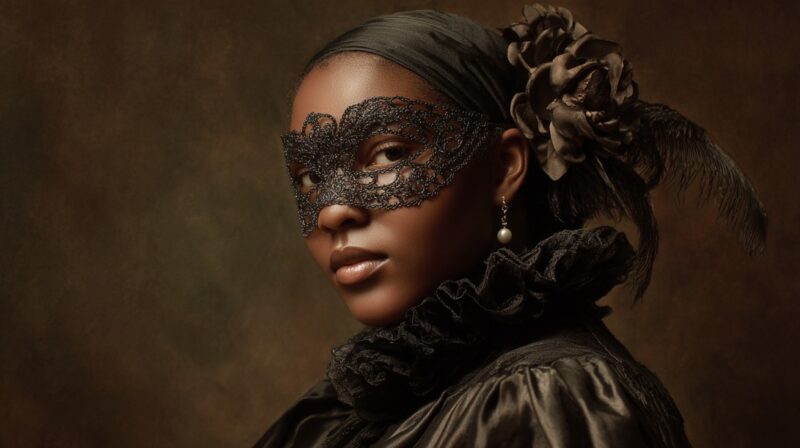
Shakespeare’s sonnets, especially those numbered 127 through 154, introduce a woman known only as the Dark Lady. Dark hair, dark eyes, and a dark complexion set her apart in a poetic tradition obsessed with fairness and idealized beauty.
Desire, guilt, attraction, and resentment pulse through the verses, creating a portrait of a woman who commands power rather than submission. Sexual confidence and moral ambiguity define her presence, leaving readers unsettled and fascinated.
Centuries of speculation about her identity reveal as much about cultural anxieties surrounding gender, race, and authorship as about Shakespeare himself.
Attention repeatedly returns to two figures, Emilia Lanier and Lucy Negro, whose lives intersect with art, power, and erasure in late Elizabethan England. Of course, there is another theory about Mary Sidney, who is thought to be the person behind Shakespeare’s work.
The Enigma of the Dark Lady
Shakespeare’s Dark Lady enters the sonnets as a disruptive force rather than an object of praise. Traditional poetic worship collapses in her presence. Moral elevation never arrives.
Attraction pulls the speaker into contradiction, fixation, and loss of self-control. Language turns sharp and conflicted, framing desire as both irresistible and destructive.
References to “my bad angel” and “my female evil” in Sonnet 144 establish a figure tied to temptation and power rather than purity.
Sexual autonomy shapes her portrayal. Control over intimacy belongs to her, not to the speaker who longs for mastery but never achieves it. Emotional dominance appears repeatedly, paired with accusations of betrayal and manipulation.
Desire fuels jealousy instead of devotion, exposing vulnerability and resentment side by side.
Conventional Elizabethan poetry rewarded obedience, silence, and chastity. Dark Lady sonnets dismantle that structure by centering a woman who refuses moral instruction and emotional submission.
Narrative authority shifts decisively in her favor. The voice of the speaker reacts rather than directs. Power imbalance unsettles expectations, forcing readers to confront discomfort tied to female agency.
Allegory and lived experience overlap constantly, creating uncertainty about how much reflects biography and how much belongs to poetic design. Tension between confession and construction sustains the mystery rather than resolving it.
Historical Hunt for the Dark Lady
Efforts to assign a name to the Dark Lady reveal as much about critical desire as about historical evidence. Scholars repeatedly sought stability in biography, hoping that identifying a woman might clarify the meaning of the sonnets.
That pursuit grew strongest during periods obsessed with authorship and moral classification.
Early Speculations and Victorian Fascination
Victorian critics advanced the search with renewed intensity. Biographical criticism flourished during that era, driven by the faith that poetry functioned as disguised autobiography. Mary Fitton became an early favorite due to proximity to power and scandal.
Her position at court and rumored involvement with William Herbert fit neatly into narratives linking the sonnets to aristocratic intrigue.
- Service as a maid of honor to Queen Elizabeth I
- Association with William Herbert, a prominent patron
- Courtly visibility that aligned with romantic speculation
Concrete evidence remained scarce. Fascination persisted anyway, sustained by a desire to anchor poetic emotion in recognizable figures rather than abstraction.
Aubrey Burl’s Survey of Candidates
Aubrey Burl widened the scope dramatically by rejecting single-candidate certainty. His study proposed eight women whose lives intersected with Shakespeare’s world at different points.
Social positions varied widely, reflecting how flexible the Dark Lady concept had become.
Women included in Burl’s survey encompassed the following:
| Name | Background | Link to Shakespeare | Supporting Evidence |
|---|---|---|---|
| Emilia Lanier | Poet, noble connections | Lover, influence, shared court circles | Literary parallels, Salve Deus, theatrical tributes |
| Lucy Negro | Brothel owner, Black woman | Possibly referenced in Henslowe’s Diary | Sonnet themes, marginal/racial identity |
| Mrs. Florio | Wife of Italian scholar | Possible acquaintance via patron | Purely speculative |
| Mary Fitton | Courtier, affair with Herbert | Common early theory | Discredited, but persistent in pop culture |
Some candidates occupied noble households. Others lived close to social suspicion or economic instability. Mrs. Florio emerged as Burl’s preferred figure due to a possible meeting with Shakespeare at Titchfield.
Irony shaped that conclusion, since Burl admitted that almost nothing concrete survives about her life. Elastic interpretation defines the entire exercise, revealing how the Dark Lady adapts to critical desire rather than historical certainty.
Duncan Salkeld’s Theory of Lucy Negro
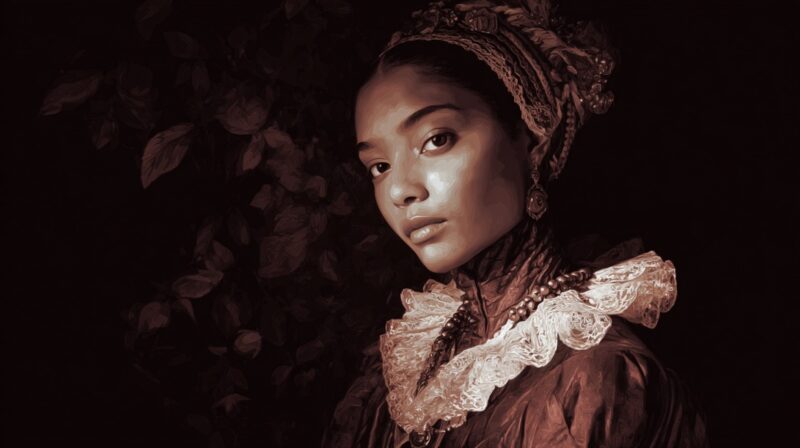
Duncan Salkeld advanced a theory that challenged respectability and comfort. His work identified Lucy Negro, also called Black Luce, as the Dark Lady.
She operated as a brothel keeper in Clerkenwell, occupying a space marked by surveillance, stigma, and regulation.
Henslowe’s Diary references a figure named “Lewce East,” possibly a fusion of Luce and her associate Gilbert East.
- Labeled an “arrant whore and a bawd” by contemporaries
- Linked to commercial sex rather than courtly romance
- Framed through racialized and sexualized judgment
Positioning the Dark Lady as a sex worker aligns closely with the sonnets’ obsession with power, shame, and desire.
Racial language surrounding Lucy Negro intensifies debates about how darkness functioned both literally and symbolically in Shakespeare’s writing.
Emilia Lanier as the Most Prominent Contender
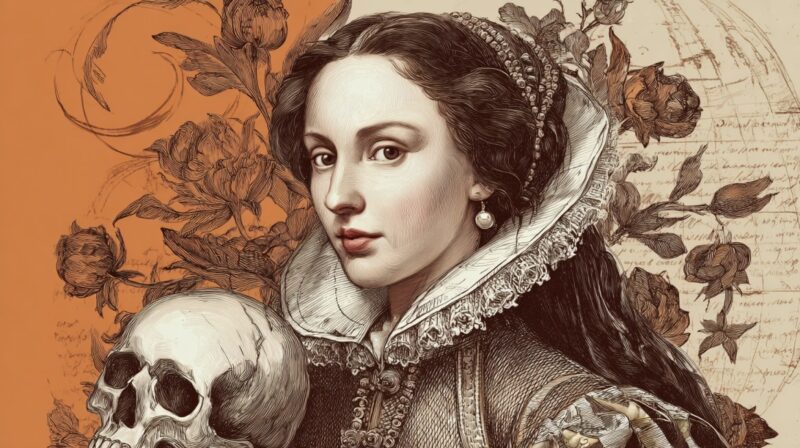
Emilia Lanier occupies a central place in modern discussion due to education, authorship, and proximity to artistic networks.
Born in 1569 to a family of Italian Jewish musicians, she likely carried North African ancestry as well. Early loss of her father altered her path significantly.
Patronage under Countess Susan Bertie granted access to literacy, music, and courtly culture rarely available to women outside nobility.
Adolescence brought a relationship with Lord Henry Carey, a powerful figure closely connected to Shakespeare’s professional circle.
Pregnancy resulted in marriage to her cousin Alphonso Lanier, widely viewed as an act of containment rather than affection. Later encounters with Shakespeare remain speculative.
Social and artistic proximity feels undeniable, even in the absence of direct documentation.
- Formal education in music and languages
- Courtly exposure through aristocratic patronage
- Direct experience with male power structures
- Literary Influence and Creative Exchange
Publication of Salve Deus Rex Judaeorum in 1611 marked a historic intervention. Lanier became the first Englishwoman to publish a substantial volume of original poetry.
Her work advanced arguments for women’s moral authority, intellectual equality, and interpretive agency. Religious framing protected her voice within acceptable boundaries while allowing radical ideas to circulate.
Musical discipline and multilingual knowledge shaped her poetic method. Scholars suggest that such training could have influenced Shakespeare through conversation or collaboration.
Female characters in his plays often display rhetorical sophistication and psychological depth that contrast sharply with educational neglect within his own household.
The presence of a learned woman like Emilia offers a persuasive explanation for that disparity.
- Women as ethical interpreters of scripture
- Intellectual parity between genders
- Female voices as authoritative rather than decorative
Reinterpretation Through Theatre
Modern theatre has reclaimed Emilia Lanier through the play Emilia by Morgan Lloyd Malcolm. Narrative structure rejects solitary genius in favor of collective experience.
Casting involves women and non-binary performers, with three actors portraying Emilia across different stages of life. That choice reframes her story as shared rather than isolated.
Production resists claims that Shakespeare secretly authored her work. Collaboration replaces hierarchy. Creative labor appears communal, shaped by dialogue and shared influence rather than ownership by a single man.
Themes and Interpretations
Racial identity complicates the interpretation of the Dark Lady. Emilia Lanier’s Jewish heritage and possible African ancestry support literal readings of darkness alongside moral symbolism.
Lucy Negro’s documented Black identity pushes that dimension further into visibility.
Darkness operates on multiple levels, linking physical appearance with desire, sin, and social anxiety.
Elizabethan fears surrounding sexuality and race surface repeatedly through such language.
Erasure and Female Authorship
Silence surrounds many women who shaped literary culture. Emilia Lanier’s work disappeared for centuries despite its ambition and originality.
Canon formation favored male voices and reinforced myths of solitary authorship. Recognition of possible female collaboration challenges long-held assumptions about attribution and ownership.
- Women preserved as muses rather than thinkers
- Authorship framed as masculine authority
- Intellectual labor rendered invisible
Social Power and Gender Dynamics
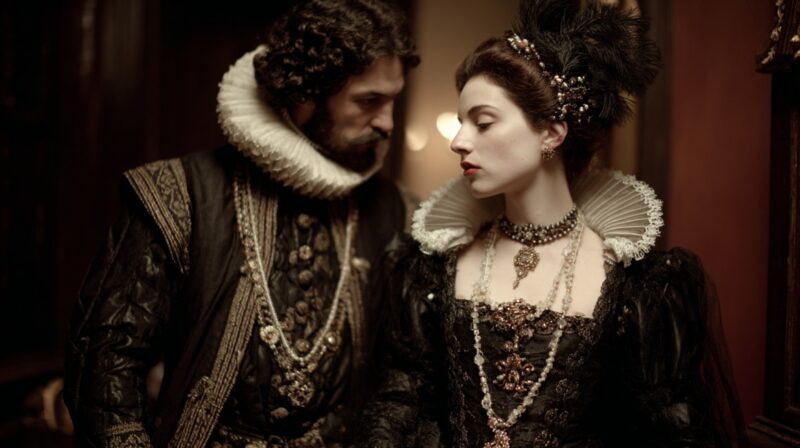
Proposed identities for the Dark Lady stretch across class boundaries, including prostitutes and nobles. Such range suggests a composite figure shaped by multiple lives rather than a single biography.
Muse, lover, rival, or collaborator, she occupies a charged position where desire collides with authority.
Shakespeare’s depiction exposes tensions within patriarchal culture, where fascination with female power exists alongside fear and condemnation.
Closing Thoughts
Certainty about the Dark Lady’s identity remains elusive. The value of the search lies in what it uncovers about suppressed voices and cultural contradictions.
Emilia Lanier emerges as a compelling presence, educated, published, and deeply connected to artistic networks of her time.
Lucy Negro introduces narratives of race, sexuality, and marginalization that resonate strongly with the sonnets. Dark Lady imagery points toward a woman who shaped creative work while remaining obscured by history.
Reconsidering her role reshapes views of Shakespeare and the women whose contributions have long been ignored.