

William Shakespeare’s reputation rests heavily on the survival of his plays through early print culture, especially the 1623 First Folio compiled by fellow actors John Heminges and Henry Condell.
That volume preserved eighteen plays that had never appeared in print before, securing a large portion of Shakespeare’s dramatic output for later generations. Without that publication, many of his works would likely have disappeared entirely.
Despite this preservation, historical records indicate that two Shakespeare plays once existed but no longer survive in complete form.
Love’s Labour’s Won and Cardenio are both supported by documentary evidence, yet no authoritative texts remain. Loss of these plays places Shakespeare within a wider Renaissance pattern.
Love’s Labour’s Won

Evidence for Love’s Labour’s Won begins in 1598, when Francis Meres listed it in Palladis Tamia among Shakespeare’s comedies. That list also included Love’s Labour’s Lost, suggesting deliberate pairing rather than accidental reference. Such listings were based on contemporary theatrical knowledge, lending credibility to the title’s existence.
Additional support surfaced in a 1603 bookseller’s inventory compiled by Christopher Hunt.
Rediscovered in 1953 by book collector Solomon Pottesman, that list recorded Love’s Labour’s Won alongside Love’s Labour’s Lost and The Merchant of Venice. Placement among known Shakespeare works strengthens the case that the play circulated commercially at some point.
Theories on Its Identity
One long-standing theory proposes that Love’s Labour’s Won functioned as a sequel to Love’s Labour’s Lost. Title symmetry supports that idea, and sequel naming practices were common on the Elizabethan stage. Comedy cycles and follow-up plays often reused characters or unresolved romantic plots.
Another explanation suggests that Love’s Labour’s Won served as an alternate title for a surviving play. Candidates frequently named include Much Ado About Nothing and All’s Well That Ends Well. Title changes occurred often during the period, especially when plays were revived or printed.
Some scholars question the play’s existence altogether. Editorial confusion, mistaken attribution, or scribal error could account for the references. Such skepticism persists due to the complete absence of surviving copies.
Why It Vanished
Printed playbooks usually appeared in quarto form, a cheap and temporary format. Such publications often omitted author names and received heavy use, making survival unlikely.
Estimates suggest that only 200 to 500 copies of Love’s Labour’s Won may have been printed.
Heavy readership may have contributed to its disappearance. Popular plays were frequently handled, shared, and discarded once worn out. No organized search effort exists today, though future discoveries remain possible through improved library cataloging or reviews of private collections.
Cardenio
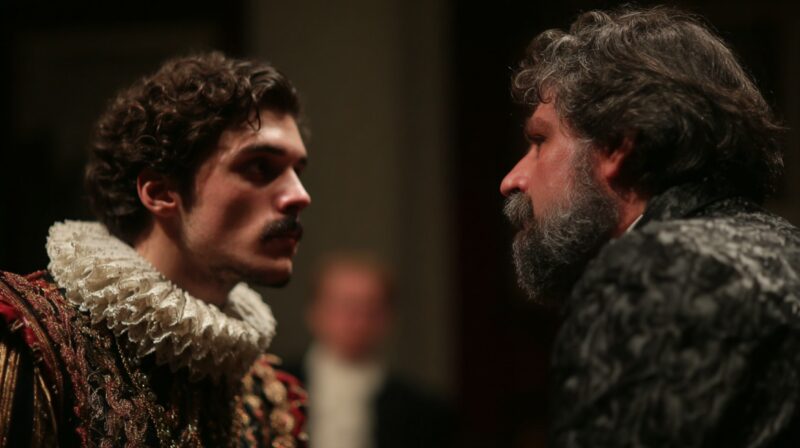
Cardenio differs from Love’s Labour’s Won due to stronger documentation. Court records show performances in May and July of 1613 at Whitehall Palace by the King’s Men. Payment entries confirm royal sponsorship and official presentation.
Plot material connects Cardenio to a subplot in Cervantes’ Don Quixote, which had recently appeared in English translation. Spanish literature held strong interest at the Jacobean court, making such adaptation timely and fashionable.
Authorship and Attribution
Authorship evidence links Cardenio to a collaboration between William Shakespeare and John Fletcher. Joint authorship aligned with common theatrical practice at the time, especially for court commissions.
A 1653 Stationers’ Register entry lists The History of Cardenio under both names. Publisher Humphrey Moseley recorded that entry, though his reputation includes several questionable attributions. Even so, combined documentary and stylistic evidence support shared authorship.
The Double Falsehood Debate
In 1727, Lewis Theobald published Double Falsehood, claiming adaptation based on manuscripts of Cardenio. Those manuscripts reportedly perished in a fire at the Drury Lane Theatre in 1808, eliminating direct verification.
Modern scholarship has revisited Theobald’s claim. Gary Taylor of Florida State University spent two decades reconstructing Cardenio by editing Double Falsehood and removing passages inconsistent with Shakespeare’s style.
Certain lines appear linguistically distinctive enough to support Shakespearean origin, including phrases Taylor describes as too idiosyncratic to belong to another writer.
Why Plays Disappear

Paper scarcity played a major role in the disappearance of early drama. Paper remained expensive and was frequently reused for practical purposes such as food wrapping or bookbinding. Play manuscripts rarely received archival treatment.
Elizabethan society viewed plays as commercial entertainment rather than permanent literature. Acting companies prioritized performance value over textual preservation, leading to neglect once a play lost profitability.
Examples of accidental destruction reinforce that reality. Titus Andronicus was long believed lost until a 1904 discovery in Sweden, where a copy had been bound inside lottery advertisements.
Eighteenth-century antiquarian John Warburton famously reported that his cook destroyed several rare play manuscripts while using them in the kitchen.
Hope for Rediscovery
Rediscoveries prove that lost works can reappear under unlikely circumstances. Titus Andronicus resurfaced through chance preservation, reminding scholars that disappearance does not guarantee permanent loss.
Another striking example occurred in 2016, when a First Folio was identified at Mount Stuart House in Scotland. That find raised the total number of known copies to 234 out of an estimated 750 printed.
Scholarly reconstruction efforts demonstrate alternative paths to recovery. Taylor’s work on Cardenio shows how surviving adaptations and stylistic analysis can approximate lost texts.
Archival funding and digitization efforts continue to expand access to uncatalogued collections. Many institutional and private libraries still contain materials awaiting detailed review.
Taylor has noted that the absence of Love’s Labour’s Won remains puzzling if any printed copies existed, yet discovery remains possible.
View this post on Instagram
Closing Thoughts
Love’s Labour’s Won and Cardenio remain among the most compelling absences in Shakespeare’s canon.
Documentary traces confirm existence, yet missing texts leave unresolved questions about content, structure, and authorship.
Recovery of either play would significantly alter Shakespeare scholarship and early modern drama studies. Continued archival work, combined with chance discovery, offers the strongest possibility.
An unnoticed volume on a neglected shelf may still hold one of literature’s most sought-after losses.
Read more: Who was behind the Shakespeare’s Dark Lady sonnets? Find out here!