

Shakespeare’s character analysis turns into strong writing when the essay stays anchored in a single argument. Students usually slip into a plot summary because the prompt feels too open. A tighter prompt asks for a judgment about character motivation, change, or responsibility, then expects proof through close reading of Shakespeare’s language.
Good topics keep attention on what Shakespeare puts on the page and on the stage: persuasion in speeches, pressure inside soliloquies, conflict inside relationships, and patterns in imagery and diction.
When students track how a character uses language to gain power, hide fear, justify violence, or protect pride, the essay starts sounding like literary analysis instead of a story recap.
1. Macbeth: Macbeth Ambition, Fear, And Moral Choice

Use this topic when a class keeps sliding into a plot summary. Macbeth gives students a straightforward line of argument: ambition opens the door, fear locks it behind him.
Ask for a judgment about which force carries more weight, then require proof from two points in the play: the early hesitation before the first murder and the later rush toward more violence.
Marking becomes easier because strong essays will show a change in language, from doubt to certainty to paranoia, instead of a list of events.
Also, if you are worried that students will simply use AI to generate an essay without analyzing the story on their own, you can use chatgpt zero to check if they are using shortcuts instead of putting themselves into this matter.
2. Macbeth: Lady Macbeth Persuasion And Responsibility
Pick this topic for lessons on influence and power in dialogue. Students can map persuasion methods: insults, emotional leverage, appeals to identity, and appeals to love.
The essay question can stay sharp: how much responsibility belongs to Lady Macbeth for the first murder, and how much belongs to Macbeth’s already existing desire for power.
Evidence comes fast, and the topic naturally supports a counterargument paragraph, since Lady Macbeth’s control weakens later.
3. Macbeth: Banquo As Contrast, Conscience, And Threat
Choose this topic when you want analysis beyond the main protagonist. Banquo faces the same prophecy and reacts with restraint, which gives students a clean comparison structure.
Essays can argue that Banquo functions as a moral contrast, or that Banquo functions as a threat inside Macbeth’s mind, or both.
The topic also trains students to read character function: William Shakespeare uses Banquo to show that Macbeth’s collapse involves choice, not fate alone.
4. Macbeth: Macduff Grief, Revenge, And Justice
Use this topic for classes ready to handle moral complexity. Macduff allows students to write about justice without drifting into general statements.
The best essays stay specific: private loss pushes public action, and grief turns into political urgency.
Students can judge whether revenge aligns with justice in the play world, then support the judgment through Macduff’s responses to loss and the final confrontation.
5. Macbeth: Malcolm Leadership, Image, And Legitimacy
Pick this topic when you want students to analyze leadership rather than murder. Malcolm offers a practical essay angle: leadership as performance, testing, and credibility building.
Students can argue that Malcolm represents stability or that Malcolm represents a careful political strategy built on image management.
Evidence often comes from Malcolm’s language about trust, proof, and kingship, which teaches students to treat speeches as character evidence rather than background noise.
6. Macbeth: The Witches And Macbeth Accountability
Useful when students lean on fate as a shortcut. Frame the prompt so the essay must decide how much influence the witches carry and where Macbeth’s responsibility begins.
Strong responses use the witches’ language as a trigger, then track what Macbeth chooses to do with that trigger.
The topic also helps teach careful wording: prophecy predicts, yet prophecy fails to command.
7. Hamlet: Hamlet Delay, Doubt, And Decision
Best for teaching how to build an argument from turning points. Students can take one clear position on why Hamlet waits, then test that position against key moments: the first reaction to the ghost, the staging of the play, the killing of Polonius, and the final act.
Keep a strict rule on evidence selection so essays stay focused on decision-making rather than general misery.
8. Hamlet: Claudius Power, Guilt, And Performance

Strong choice for classes working on political reading. Claudius gives students material on public image, private guilt, and rhetorical control of a court.
Essays can judge whether Claudius appears as a competent ruler corrupted by crime or as a criminal who borrows the language of leadership.
The prayer scene often anchors the argument well because it brings guilt into direct view.
9. Hamlet: Gertrude Survival, Blindness, And Complicity
Use this topic when discussion needs a careful, evidence-first approach. Students often bring assumptions, so they require a close reading of what Gertrude actually says and does.
Possible essay lines include survival instinct, emotional dependence, or limited awareness of the crime.
Better essays stay disciplined and avoid mind-reading by tying claims to scenes and reactions.
10. Hamlet: Ophelia Agency Under Family Pressure
Reliable topic for teaching how character pressure works in tragedy. Essays can focus on how family authority shapes Ophelia’s choices, then show what happens when support systems collapse.
Encourage students to connect language shifts to changing circumstances, since Ophelia’s speech patterns offer clear signals of stress and loss.
11. Hamlet: Polonius Authority, Surveillance, And Control
A practical topic for teaching how minor characters drive major outcomes. Polonius treats information like currency, and students can trace how that habit creates risk for everyone near him.
The essay can argue that Polonius’s overconfidence fuels tragedy, or that Polonius acts as a symptom of a court culture built on spying and performance.
Evidence sits in advice speeches, instructions to Reynaldo, and choices around Ophelia and Hamlet.
12. Hamlet: Laertes Anger, Honor, And Manipulation
Pick this when you want students to compare two responses to loss. Laertes moves fast, speaks bluntly, and becomes easy to steer.
An essay can judge whether Laertes represents decisive virtue or reckless anger, then show how Claudius exploits that energy.
The topic pushes students toward cause and effect: grief becomes leverage, then leverage becomes violence.
13. Othello: Othello Trust, Status, And Self Image
A strong selection for lessons on insecurity and persuasion. Students can build an argument about why Othello trusts Iago, focusing on status anxiety, outsider identity, and military habits of loyalty.
Keep the prompt narrow so essays stay close to key exchanges rather than general comments about jealousy.
The best evidence usually comes from how Othello begins by speaking with control and ends by speaking with fragmentation.
14. Othello: Iago Motive, Method, And Manipulation
Use this topic to teach structure in argument writing. Students should pick a dominant motive, then account for contradictions instead of ignoring them.
Another angle: treat motive as less important than method and show how Iago gains trust, plants doubt, and controls the pace of information.
The marking advantage stays simple: strong essays show technique, weak essays retell tricks.
15. Othello: Desdemona Courage, Integrity, And Risk
Good for moving beyond passive character labels. Desdemona makes decisions, speaks with directness, and accepts social risk early in the play.
Essays can argue that courage becomes a strength that also leaves Desdemona exposed, especially when public reputation starts to matter more than private truth.
16. Othello: Emilia Truth, Loyalty, And Moral Awakening
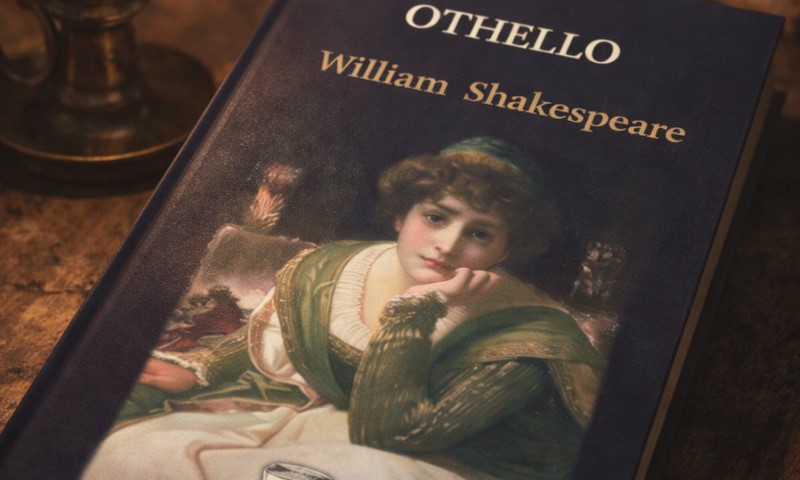
This topic works well for classes ready to track late-stage change. Emilia starts inside a system of obedience and ends as a voice of exposure.
An essay can guide students toward judging when loyalty shifts into responsibility.
17. Romeo And Juliet: Friar Laurence Intention, Error, And Responsibility
Romeo and Juliet is useful when teaching cause and consequence. Friar Laurence acts with good intentions and poor timing, which gives students room to argue responsibility without falling into blame only.
Essays can test whether the tragedy grows from individual error or from a chain of reasonable decisions that spiral out of control. This topic helps students practice balanced judgment.
18. Julius Caesar: Cassius Persuasion, Envy, And Political Strategy
A strong option for rhetoric-focused lessons. Cassius persuades through flattery, fear, and selective logic.
Students can argue that Cassius understands politics better than Brutus, or that personal resentment weakens judgment.
Speeches and private conversations give clear material for close reading and argument building.
Additional Suggestions For Choosing A Shakespeare Character Analysis Topic
@miss.dixon0 Macbeth- character analysis #macbeth #ladymacbeth #gcse #revision #aqa #revision #literature #study #revise #englishteacher
- Match the prompt to one teachable skill: motive, change, responsibility, persuasion, or character function
- Build the question around a decision point: before the first major mistake, after a public speech, after a betrayal
- Limit evidence targets to three scenes, so students go deeper instead of wider
- Require at least one quotation from a soliloquy or monologue when the play has them
- Pair a main character with a foil character when essays need clearer comparison
- Use a prompt that invites two reasonable answers, then grade on proof and logic rather than personal opinion
- For mixed ability groups, offer two versions of the same prompt: one with a named scene list, one open choice
- Set a paragraph plan in advance: claim, evidence, language method, meaning, link back to prompt
- Add one required counterpoint sentence per paragraph to reduce note-taking
- Use a short quote rule: no more than two lines per quotation, then analysis in the student’s own words
Final Thoughts
Shakespeare character analysis becomes easier to teach when prompts do the narrowing for students. Topics that force a judgement, point toward a small set of scenes, and invite more than one reasonable reading tend to produce writing that stays analytical. That also makes assessment clearer: a strong essay presents a stable claim, selects evidence with purpose, and explains how Shakespeare language and choices on stage build character.
For lesson planning, treat each topic as a tool. Use motive prompts when students need tighter thesis writing. Use persuasion prompts when students need better quote analysis. Use character function prompts when students need to move beyond the main protagonist. A good topic sets the direction, and the classroom work then becomes guiding students from quotation to argument with discipline and clarity.