
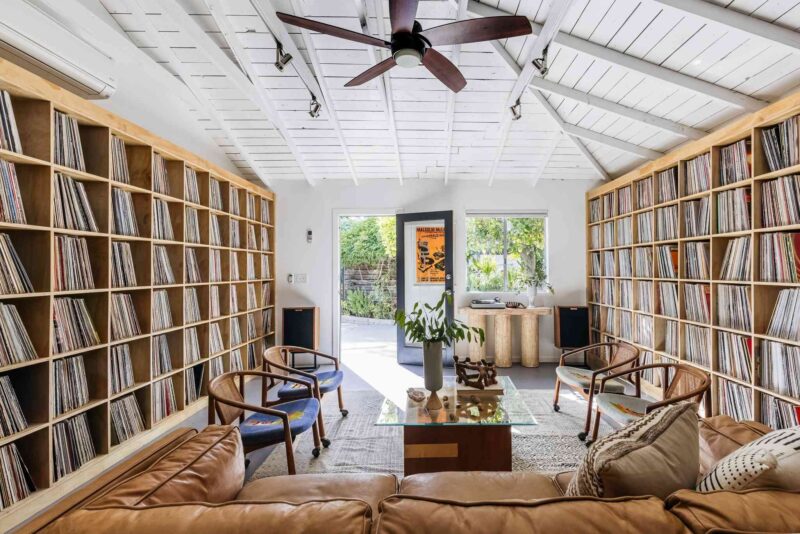
A spare bedroom can become a useful home library without expensive custom woodwork or a large renovation. The best results come from planning around the books you own, the way you read, and any other purpose the room must continue to serve.
Before buying shelves, measure the walls, note the position of windows and outlets, and check the room for dampness or strong sunlight.
From there, you can create a comfortable reading room with secure storage, layered lighting, a supportive chair, and enough open space to prevent the collection from overwhelming the room.
Measure the room and count your books first
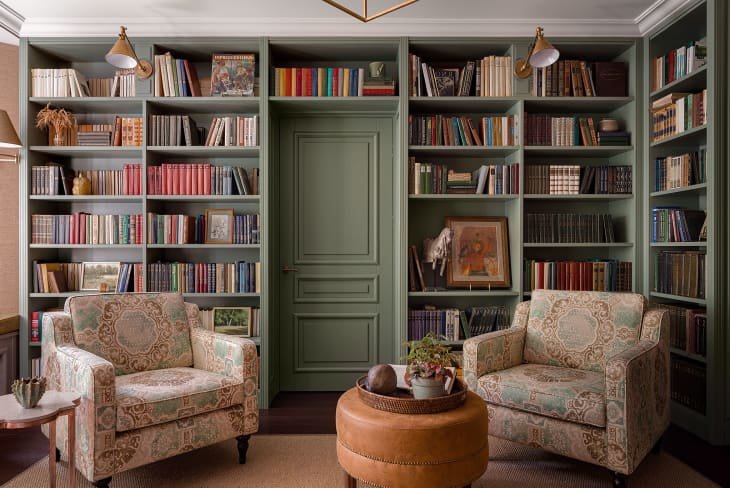
Start with a simple floor plan showing the length of each wall, ceiling height, door swing, windows, heating vents, and electrical outlets.
Measure your tallest and deepest books as well. Art books, dictionaries, and collected editions may require more shelf depth and height than ordinary paperbacks, so a single standard bookcase may not suit the entire collection.
Before choosing a layout, record:
- The amount of uninterrupted wall space available for shelving
- The number of books you own and how quickly the collection is growing
- Where a chair, small table, and reading lamp can fit comfortably
- Whether the room must occasionally accommodate an overnight guest
Leave a clear route between the entrance, seating, and shelves. A home library should feel easy to use rather than carefully packed.
Prepare the walls before installing shelves
Painting, repairing drywall, and updating trim are much easier while the bedroom is empty. Light and mid-tone colors can help a small room feel open, while deeper colors create a quieter atmosphere but may require stronger lighting. Choose a finish that tolerates occasional cleaning, particularly behind freestanding bookcases where dust tends to collect.
Homeowners who want the preparation and finish handled professionally can ask a residential painting company in Southlake TX to assess patched walls, trim, and suitable interior coatings before shelving is installed. Whatever approach you take, allow the paint to cure and the room to air out fully before returning books. Paint first, then secure the shelving; reversing that order creates awkward edges and makes future touch-ups harder.
Choose shelving that matches the space
Freestanding bookcases cost less and can move with you, while fitted shelving uses awkward corners and the full height of a wall more efficiently. Low shelves beneath a window preserve daylight. Tall units provide more capacity but should not block vents, switches, or the natural path through the room.
| Shelving option | Best use | Main consideration |
| Freestanding bookcases | Renters and flexible layouts | Secure tall units to the wall |
| Built-in shelving | Long-term rooms and uneven walls | Higher installation cost |
| Low modular shelves | Small rooms and window walls | Less storage per wall |
Adjustable shelves are useful when a collection includes poetry volumes, oversized art books, and boxed editions. Place the heaviest books on lower shelves to improve stability and make them safer to lift.
Combine general light with a proper reading lamp
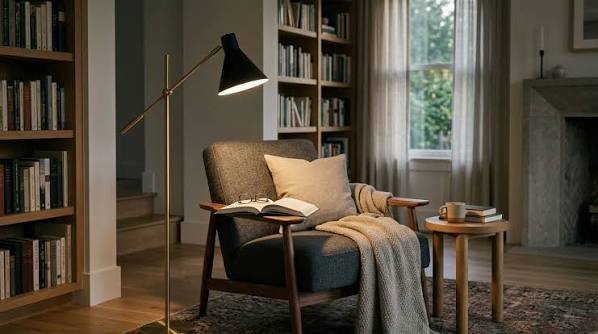
A ceiling fixture alone often leaves shadows across the page, especially when the reader sits beneath or behind it.
Use layered lighting instead: general illumination for moving around the room, an adjustable lamp beside the chair, and optional shelf lighting for titles that would otherwise remain in shadow. Position the reading lamp so your head and hand do not block its beam.
The U.S. Department of Energy’s guidance on LED lighting notes that LEDs offer strong optical control, dimming options, and high energy efficiency.
A dimmable lamp therefore works well in a room used at different times of day. Avoid directing intense bulbs toward seated readers or glossy book covers.
Curtains or adjustable blinds can soften glare without turning the room into a permanently dark space.
Protect the collection from moisture, sunlight, and unstable furniture
Books fare best in a clean, stable room away from leaks, radiators, vents, and prolonged direct sunlight. The Library of Congress recommendations for storing books favor a cool, relatively dry environment with minimal light exposure.
The EPA’s household mold guidance also advises controlling indoor moisture and responding promptly to leaks.
Important storage principle: stability matters. Repeated changes in heat and humidity can be harder on paper and bindings than a consistently moderate indoor environment.
Do not press bookcases tightly against a wall with an unresolved damp problem. Secure tall shelving with appropriate hardware for the wall material.
The U.S. Consumer Product Safety Commission’s Anchor It campaign recommends anchoring furniture with shelves to reduce tip-over hazards, particularly where children may enter the room.
Organize the books around the way you read
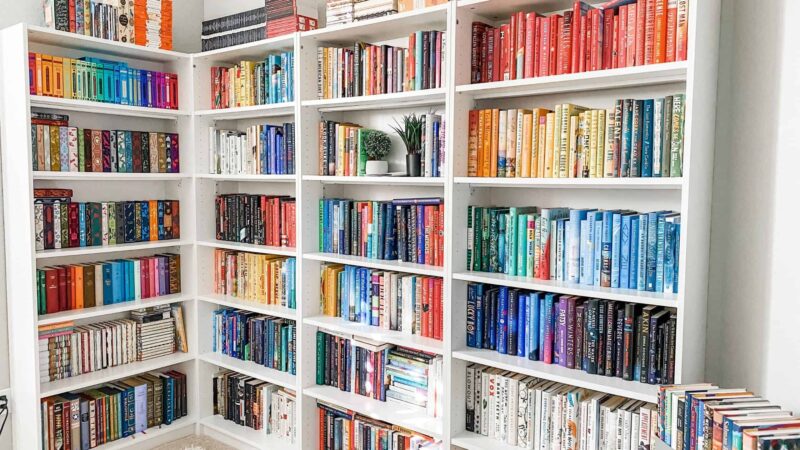
A useful system is more important than a decorative one. Alphabetizing every volume may suit a large fiction collection, but smaller libraries often work better when divided first by subject and then by author.
Poetry, drama, biography, criticism, art, and reference books can each occupy a defined area. Keep current reading and frequently consulted titles close to the chair or desk.
You can make the room easier to use by adding:
- Bookends for partially filled shelves
- A small return basket for books awaiting reshelving
- Labels for broad subjects or historical periods
Set aside one shelf for current interests, such as Shakespeare character analysis topics or an exploration of words first recorded in Shakespeare. If books regularly leave the room, a simple notebook prevents favorites from quietly disappearing.
Frequently asked questions
1. How many books do I need before creating a home library?
There is no minimum collection size. Even 50 carefully chosen books can justify a dedicated reading room if you use them regularly. Begin with enough shelving for the current collection and reserve some empty space for future additions rather than filling every shelf immediately.
2. Can a home library include a television?
Yes, although its placement should not dominate the reading area. A television can sit inside a cabinet or on a wall away from the main chair. Keep cables organized and avoid placing electronic equipment directly beneath shelves where books could fall.
3. Are rolling library ladders suitable for a converted bedroom?
Usually not unless the room has professionally installed, floor-to-ceiling shelving and sufficient clearance. A stable step stool is more practical for most bedrooms. Never use a chair, desk, or stack of books to reach an upper shelf.
4. How can renters create a library without permanent changes?
Use modular bookcases, a freestanding reading lamp, washable rugs, and removable window coverings. Furniture still needs suitable anti-tip protection, so discuss safe anchoring methods with the property owner instead of assuming that a no-drill arrangement is safer.
At The End
Turning a spare bedroom into a home library succeeds when the room supports regular reading rather than merely displaying books. Plan the layout before purchasing furniture, finish wall repairs first, and give shelving, lighting, and moisture control equal attention.
Once the practical work is complete, add only the objects that make the space personally useful: a favorite print, a writing desk, a blanket, or one shelf devoted to treasured editions. The final test is straightforward.
You should be able to enter, find a book, settle into the chair, and begin reading without rearranging the room.